
Understanding Peyote and Its Botanical Background
Peyote is a small, slow-growing cactus scientifically known as Lophophora williamsii. Native primarily to parts of northern Mexico and southern Texas, the plant has a long history of cultural, ceremonial, and ethnobotanical significance. In educational contexts, peyote cactus powder may be discussed as a botanical preparation derived from dried cactus material, but its characteristics and legal status can vary considerably depending on location and intended context.
From a botanical perspective, peyote belongs to the Cactaceae family and has a distinctive rounded, spineless appearance. Mature plants generally grow close to the ground and can develop several crowns over time. Their natural habitat includes dry, rocky environments where rainfall is limited and temperatures can fluctuate significantly. These ecological conditions contribute to the plant's slow development and distinctive biological adaptations.
Historical and Ethnobotanical Significance
Peyote has been associated with Indigenous traditions in North America for centuries. Archaeological and historical evidence indicates that communities in Mexico used the plant in ceremonial and spiritual contexts long before modern scientific interest developed. These traditions are culturally specific and should be understood within their broader religious and social frameworks rather than reduced to the plant's psychoactive properties.
Ethnobotanical research examines how communities interact with plants for cultural, spiritual, medicinal, nutritional, and practical purposes. Within this field, peyote is especially notable because its traditional importance extends beyond its physical characteristics. Researchers may examine historical records, botanical specimens, cultural practices, and conservation concerns to better understand the relationship between people and this distinctive cactus.
Botanical Characteristics of Dried Powder
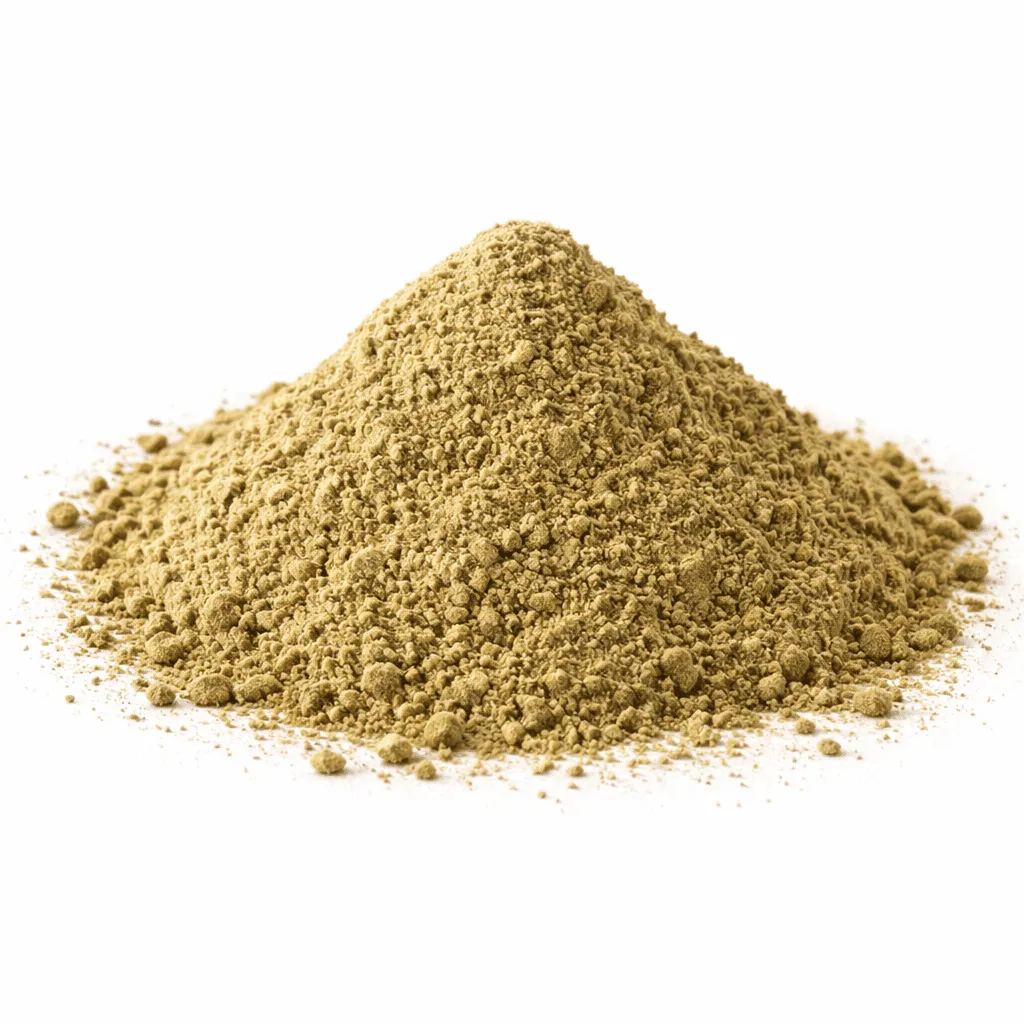
When botanical cactus material is dried and finely milled, its original structure becomes less apparent. The resulting material may vary in color, texture, aroma, and particle size depending on factors such as plant maturity, drying conditions, storage, and milling methods. These characteristics alone cannot reliably establish botanical identity or chemical composition.
For educational reference, peyote cactus powder can therefore be considered a processed botanical specimen rather than a standardized pharmaceutical material. Laboratory identification generally requires appropriate botanical or analytical methods. Visual inspection by itself may not be sufficient to distinguish related cactus species or determine the presence and concentration of particular naturally occurring compounds.
Naturally Occurring Constituents
Peyote is scientifically notable because it contains naturally occurring alkaloids, including mescaline. Mescaline is a psychoactive compound that affects the central nervous system and is responsible for many of the plant's well-documented psychoactive effects. Scientific literature has examined its pharmacology, historical use, and interactions with neurological systems.
The chemical composition of plant material is not necessarily consistent from one specimen to another. Environmental conditions, genetics, plant age, cultivation or wild-growing conditions, and processing can influence the concentration of naturally occurring constituents. Consequently, powdered botanical material should not be treated as having a predictable or standardized chemical profile.
Educational and Research Applications
In an academic setting, peyote cactus powder may be relevant to studies involving ethnobotany, anthropology, botany, conservation biology, pharmacognosy, and the history of traditional plant use. Researchers may use authenticated botanical specimens to investigate morphology, taxonomy, plant chemistry, or historical patterns of human interaction with desert plants.
Educational discussion should also distinguish traditional cultural knowledge from modern commercial descriptions. Claims concerning therapeutic benefits, spiritual outcomes, or chemical consistency require careful evaluation against reliable scientific evidence. A responsible reference guide should avoid presenting unverified claims as established facts.
Conservation and Sustainable Perspectives
Peyote presents important conservation questions because the cactus grows slowly and may take many years to reach maturity. Habitat alteration, harvesting pressure, changing environmental conditions, and other ecological factors can affect wild populations. Conservation discussions therefore emphasize responsible stewardship and protection of natural habitats.
Ethnobotanical research can contribute to conservation by documenting traditional knowledge while encouraging greater awareness of ecological limitations. Studying a plant responsibly means considering not only its cultural and scientific importance but also the long-term health of the ecosystems in which it naturally occurs.
Legal and Cultural Considerations
The legal status of peyote and materials derived from it differs between countries, states, and jurisdictions. Regulations may address possession, cultivation, transportation, sale, importation, or use, and certain religious or cultural practices may receive specific legal treatment in some places. Because regulations can change, anyone conducting legitimate academic or botanical research should consult the applicable laws and institutional requirements in their jurisdiction.
Cultural considerations are equally important. Peyote has a particularly significant role in certain Indigenous religious traditions. Educational material should therefore avoid treating the plant solely as a commodity or recreational substance and should recognize the communities whose cultural histories are closely connected with it.
Responsible Storage and Specimen Documentation
For legitimate botanical or academic collections, documentation is an important part of responsible specimen management. Researchers may record the scientific name, source information, collection history where legally available, processing details, and storage conditions. Proper labeling helps preserve the educational value of a specimen and reduces uncertainty about its identity.
Because powdered plant material can be difficult to authenticate visually, reliable provenance is especially valuable. Academic collections should follow applicable institutional procedures for controlled or regulated botanical materials and maintain appropriate records for research purposes.
Why Accurate Information Matters
Peyote has attracted considerable public interest, but popular descriptions can sometimes mix historical facts, personal anecdotes, commercial claims, and scientific information. A careful educational approach separates these categories. Botanical facts should be supported by reputable references, while cultural practices should be presented with appropriate historical and Indigenous context.
Understanding peyote requires more than examining its psychoactive chemistry. Its story involves desert ecology, Indigenous traditions, plant taxonomy, conservation, pharmacology, law, and contemporary research. This broader perspective makes the subject valuable for interdisciplinary study.
Frequently Asked Questions
What is peyote?
Peyote is a small, spineless cactus known scientifically as Lophophora williamsii. It is native to regions of Mexico and the southern United States and has longstanding cultural and ceremonial significance.
What is peyote cactus powder?
Peyote cactus powder generally refers to dried cactus material that has been finely milled. Its composition can vary, and it should not automatically be regarded as a standardized botanical or pharmaceutical product.
What compound is peyote known for?
Peyote is particularly known for mescaline, a naturally occurring psychoactive alkaloid. Scientific research has investigated its pharmacological properties and effects on the nervous system.
Is peyote legal everywhere?
No. Laws concerning peyote and mescaline vary substantially between jurisdictions. Certain Indigenous religious practices may have specific legal protections in some areas, while possession or distribution may be restricted elsewhere. Local regulations should always be checked.
Why is peyote important to ethnobotany?
Peyote is important to ethnobotany because it demonstrates the complex relationship between plants, human cultures, traditional knowledge, spirituality, ecology, and conservation. Studying it provides insight into both botanical science and the cultural history of plant use.